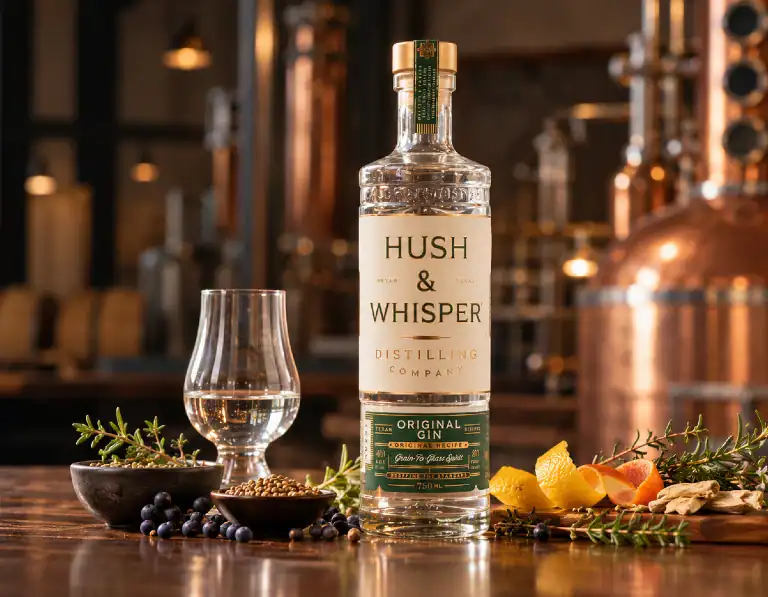
Ever wondered what goes into making an award-winning gin? Spoiler alert: it’s a little more involved than throwing a handful of juniper berries into a still and hoping for the best. The craft gin distilling process is all about balancing carefully selected botanicals, precise distillation, and a healthy dose of patience to create a spirit that’s bursting with character. Whether you’re a gin enthusiast, a curious cocktail lover, or someone who simply wants to know what’s actually in their glass, we’re taking you behind the scenes at Hush and Whisper Distilling Co. to explore how gin is made, what gives it its distinctive flavor, and why the craftsmanship behind every bottle matters.
What Makes Our Award-Winning Craft Gin Different?
Gin is built on balance: bright enough to refresh, complex enough to keep you coming back. Our Original Gin was crafted with that exact tension in mind.
Distilled in small batches at Hush and Whisper Distilling Co. in Bryan, Texas, our gin opens with citrus, juniper, fruit, and fresh herbal aromatics. On the palate, a subtle candied sweetness gives way to tropical fruit and classic botanical structure, followed by a long, clean finish with lingering juniper and citrus.
And we’re not the only ones who think it turned out pretty damn well.
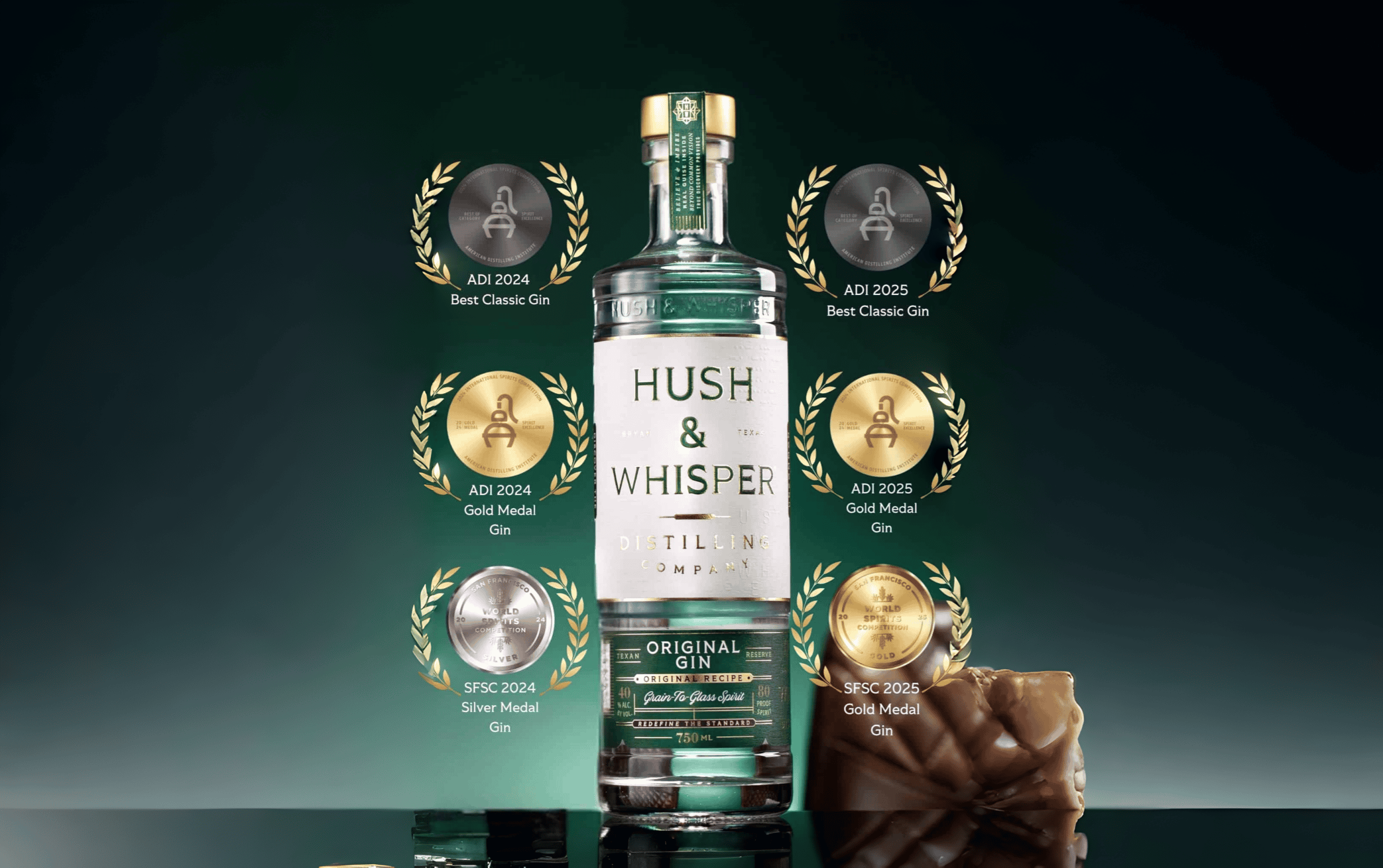
Our Original Gin has earned:
- Silver Medal, 2024 San Francisco International Spirits Competition
- Gold Medal, 2025 San Francisco World Spirits Competition
- Gold Medal, American Distilling Institute, 2024 and 2025
- Best Classic Gin, American Distilling Institute, 2024 and 2025
Fresh, complex, and nationally awarded, our Original Gin proves that a classic spirit can still make a modern statement. Now, let’s look at the craft gin distilling process that turns grain, botanicals, and plenty of careful decisions into the spirit that reaches your glass.
Gin Production: From Grain to Base Spirit
Before juniper and botanicals enter the picture, gin needs alcohol to work with.
The base spirit for gin is usually made from grain, with wheat and corn among the common choices. Alcohol can also be produced from ingredients such as potatoes or grapes.
Fermentation converts sugar into alcohol, creating a fermented liquid that is then distilled. Modern producers often use column stills to purify this alcohol into a clean neutral spirit. Depending on the process and type of equipment, multiple distillations may be used before the base is ready for the next stage.
That neutral spirit gives gin distillers a clean canvas for building flavor.
Juniper and Botanicals: The Heart of Our Gin
No juniper, no gin. Those little berries are nonnegotiable.
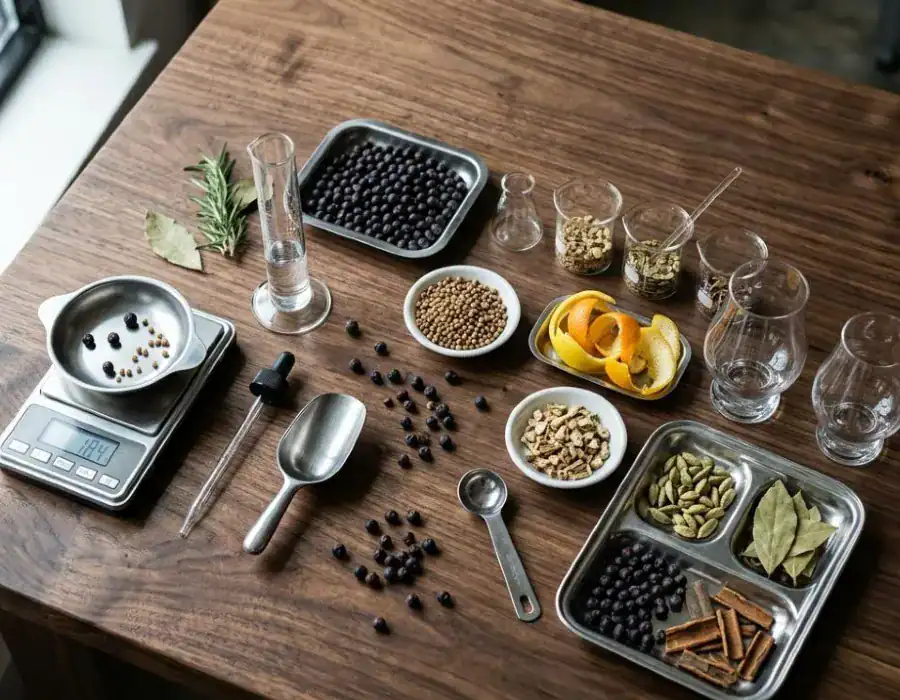
Juniper provides the familiar piney, woody notes associated with classic gin, but it doesn’t have to run the entire show. Coriander, angelica root, citrus peel, herbs, roots, flowers, and spices can all contribute different aromas and flavors.
Gin recipes commonly feature several botanicals, and distillers have well over a hundred possibilities to explore. A traditional London dry gin may put juniper firmly in the spotlight, while other styles give citrus, floral, herbal, or spicy notes more room to play.
The challenge isn’t cramming everything into the botanical basket. It’s finding balance.
Gin Distillation: Steeping vs. Vapor Infusion
Here’s where the botanicals finally meet the booze.
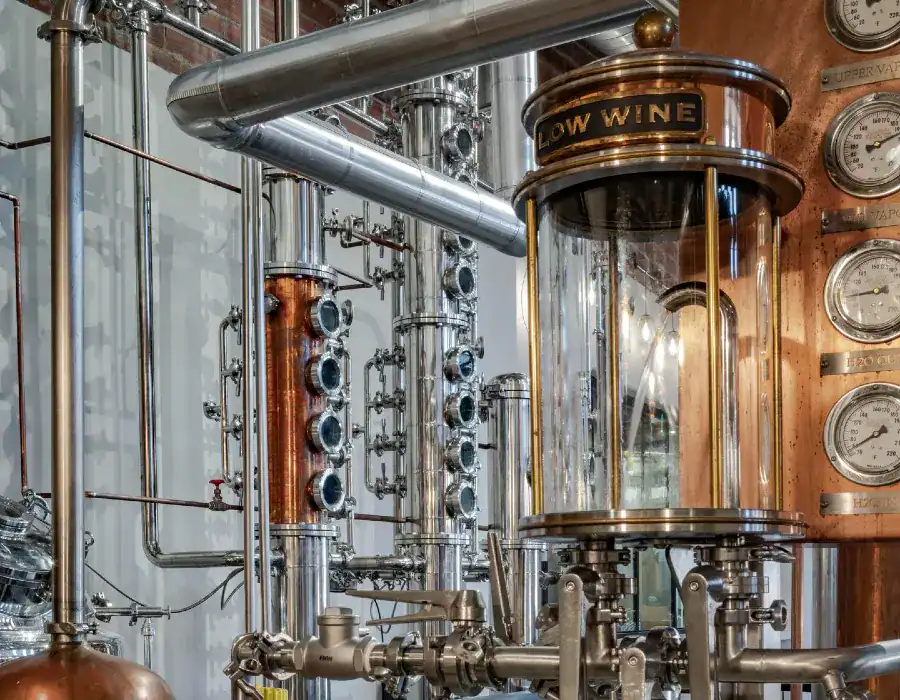
Maceration and vapor infusion are two major extraction methods used in gin production. With the steep-and-boil method, botanicals are steeped directly in neutral spirit. The mixture is then heated and distilled, carrying botanical flavor into the resulting distillate.
Vapor infusion keeps the botanicals separate from the liquid, often placing them in a basket inside the still. Alcohol vapor travels through the botanicals, allowing delicate ingredients to release essential oils without being boiled directly.
Some gin distillers use one method, while others combine techniques to capture different characteristics from their ingredients.
Vacuum Distillation and Other Gin-Making Methods
Traditional pot and column distillation aren’t the only tools available to modern gin makers.
Vacuum distillation lowers pressure inside the still, which reduces the temperature required for distillation. Working at lower temperatures can help preserve fresher, more delicate aromas that might behave differently under higher heat.
Another option is multi-shot gin production. This method uses concentrated botanicals to produce a stronger botanical distillate, which is later combined with additional neutral spirit and water. It allows producers to increase volume efficiently while maintaining the intended recipe.
Different methods can produce very different results. Temperature, duration, equipment, and the way botanicals interact with the alcohol all influence the final spirit’s character.
Heads, Hearts, and Tails: Making the Right Cut
Not everything that leaves the still gets invited to the party.
As distillation progresses, the distillate is separated into portions known as the heads, hearts, and tails. The early heads contain more volatile compounds, while the later tails contain heavier compounds that can bring unwanted flavors.
The hearts are the prized middle portion used to craft the finished spirit.
A master distiller determines where those cuts should happen based on the particular distillation, measurements, aroma, and taste. Careful cuts help maintain the desired character while leaving undesirable portions behind.
From Distilled Gin to the Finished Bottle
Coming out of the still doesn’t mean the gin is ready for the shelf.
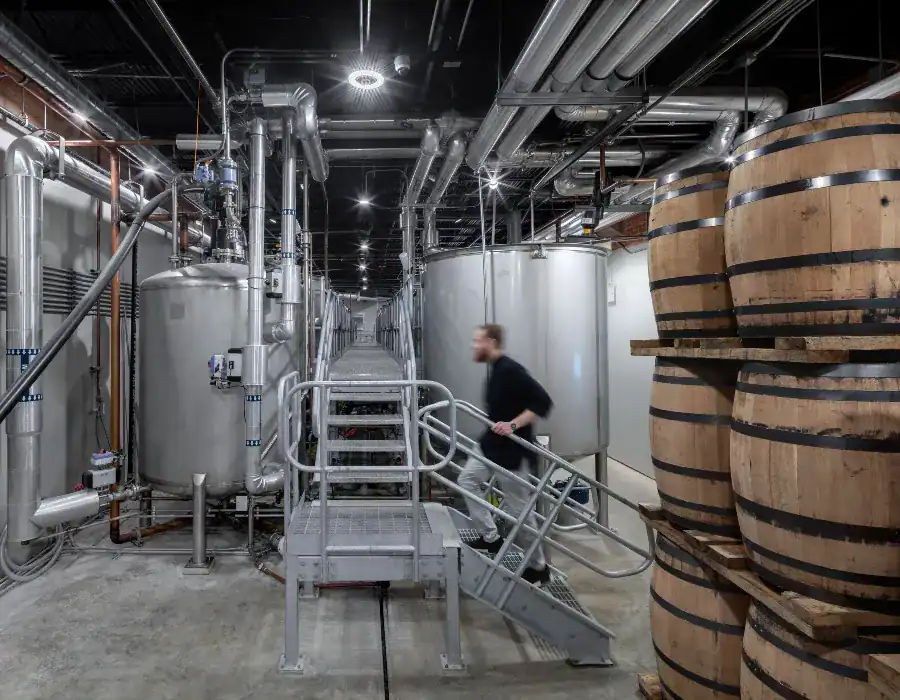
Freshly distilled spirit can have a much higher alcohol content than the final product. During proofing, water is added to bring the gin to its intended bottling strength. In the United States, gin must be bottled at no less than 40% alcohol by volume.
The gin may then be allowed to rest before bottling. This gives the water, alcohol, and botanical compounds time to marry, helping the flavors settle into a smoother, more cohesive spirit.
Unlike an aged whiskey, classic gin doesn’t need a long stay in a barrel to find its personality. Its character comes largely from the base spirit, botanicals, distillation, and the decisions made along the way.
How to Taste Our Award-Winning Gin
There are many types of gin. After all that work, tossing any into a glass with half a bottle of tonic without tasting it first seems a little rude.
Pour a small amount of Hush and Whisper gin into a clean glass and start with the aroma. Then take a small sip and let it move across your palate. Look for the relationship between juniper, citrus, herbal or spicy notes, and the finish.
You can also add a few drops of water and taste again. Changing the alcohol concentration can open up different aromas and give you another look at the spirit.
Then, by all means, bring out the tonic.
Discover Hush and Whisper Distilling in Bryan, TX
There’s a long way between grain and glass. Gin production brings together fermentation, botanicals, distillation, careful cuts, proofing, resting, and a whole lot of knowing when to stop tinkering. For us, it all comes down to authenticity at every step.
At Hush and Whisper Distilling Co., we’re proud to make award-winning spirits in Downtown Bryan, Texas, and even prouder when people want to learn what went into their glass.
Want to experience our gin for yourself? Stop by the distillery to refresh your appreciation for a well-made spirit, pick up a bottle from our store, or end your day with a pour at Hush and Whisper. Contact us to learn more about our spirits, tastings, and what’s happening at the distillery today.