Pour gin into a glass, and something immediate happens. Juniper arrives first, clean and unmistakable. Then citrus, or fruit, or herbs, or spice. Maybe all of them at once. The spirit shifts depending on what the distiller chose to highlight, how they balanced the botanicals, and what kind of gin they set out to create.
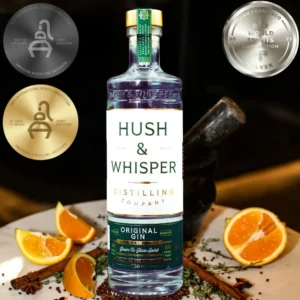
At Hush and Whisper Distilling Co. in Bryan, Texas, we make a grain-to-glass classic-style gin that has won gold medals at the San Francisco World Spirits Competition and the American Distilling Institute, where it also took Best Classic Gin. Our gin carries fruity and citrus aromas on the nose, candied sweetness with hints of tropical fruit, and a long finish where juniper and citrus linger. It’s built from juniper berries, coriander seeds, angelica root, orris root, lemon peel, orange peel, pink grapefruit, and green cardamom, turned from neutral grain spirit into something expressive.
Understanding gin types means understanding what these choices create. Here’s how different styles reveal themselves through flavor, history, and the glass.
The Foundation: What Makes Gin Gin
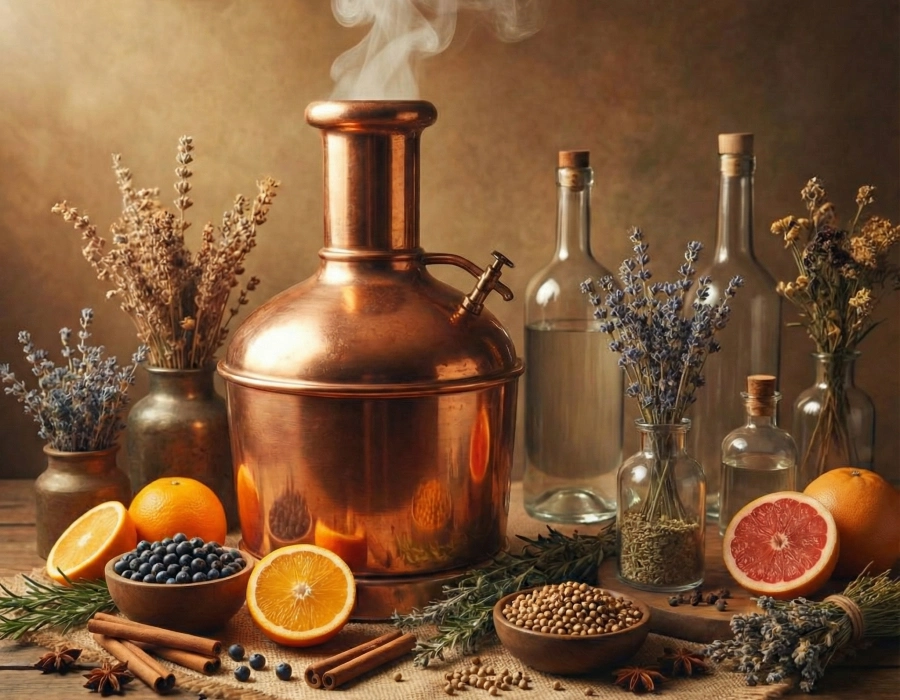
Every gin starts with juniper. Without that distinctive juniper flavour, it’s not gin. It’s just flavored vodka. But juniper is only the beginning. After that, the distiller decides everything else.
Citrus peels bring brightness. Angelica root and orris root provide structure and depth. Coriander seeds add spice. Fruits soften edges. The distillation process locks these botanical ingredients together into a single, cohesive spirit.
This is where gin types diverge. Some lean into juniper until it dominates. Others let citrus or fruit take the lead. Some add sweetness after distillation. Some age in barrels. Each choice creates a different experience.
London Dry Gin: The Standard
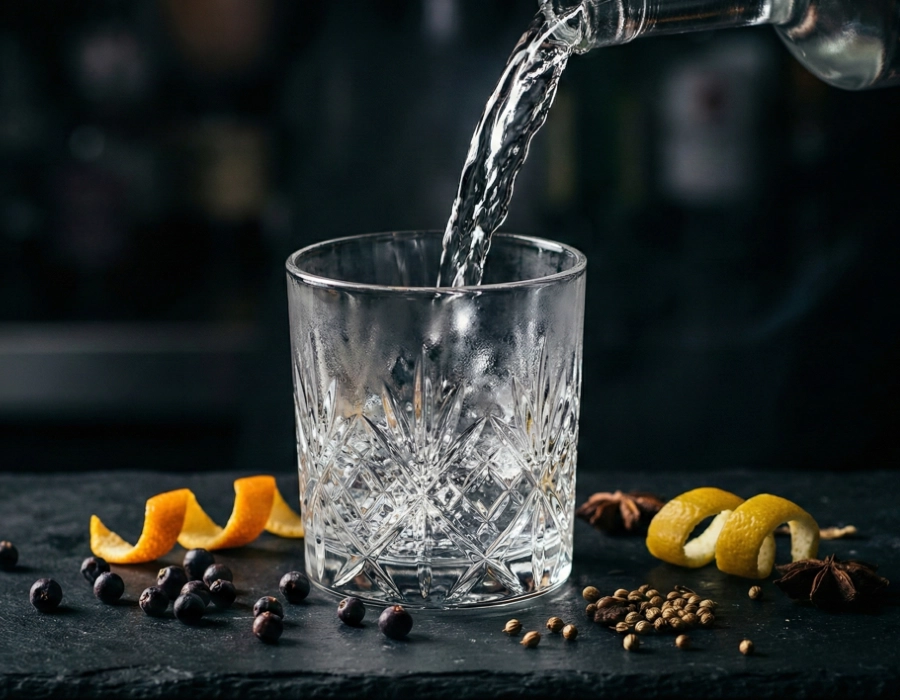
London Dry gin is the category most people think of when they think of gin. It’s not about geography. Gin produced anywhere can be London Dry style. It’s about process and flavor profile.
London Dry means no artificial flavors, no sweeteners, and all botanicals added during distillation. The result is crisp, juniper-forward, and structured. Strong citrus notes snap into place early. The finish stays clean and dry.
Classic London Dry gin built the foundation for gin cocktails. A martini relies on that clarity. A gin and tonic lets the botanicals shine through without interference. When you want a gin taste that doesn’t hide, this is the style.
Our gin follows this London Dry approach. Nothing added after distillation, just grain-to-glass purity. But we let fruit and citrus rise alongside juniper rather than behind it. The candied sweetness comes from the botanicals themselves, not from sugar.
Old Tom Gin: The Softer Side
Old Tom gin is the historical bridge between Dutch gin and modern London Dry. Before the 19th century, gin was rougher. Old Tom softened that edge with a touch of sweetness, making it rounder and easier to drink.
Tom Gin isn’t heavily sweetened like flavored gin or sloe gin. It’s just soft enough to smooth the juniper without turning syrupy. The mouthfeel changes. The botanicals blend rather than contrast.
If you’ve ever found London Dry too sharp, Old Tom might be your style. It works beautifully in classic cocktails like the Tom Collins and Martinez cocktail, where a little softness balances citrus and fizz.
The candied quality in our gin (coming purely from how the pink grapefruit and citrus integrate) gives it a texture that Old Tom drinkers often recognize and appreciate.
Plymouth Gin: Earthy and Warm
Plymouth gin is the only gin with protected geographical status. It must be gin produced in Plymouth, England, traditionally at the Black Friars Distillery. The style sits between London Dry’s crispness and Old Tom’s roundness.
Plymouth gin emphasizes earthy botanicals. Angelica root, orris root, and other grounding elements create warmth in the mid-palate. It’s less citrus-forward than London Dry, more herbaceous, with a distinct flavor that feels calmer and more integrated.
British gin houses that specialize in Plymouth style focus on balance rather than bright contrast. The gin works well in stirred drinks and classic cocktails where you want depth without aggression.
Navy Strength Gin: Bold and Intense
Navy strength gin is about proof, not botanicals. It’s bottled at 57% ABV or higher. Strong enough that if gunpowder soaked in it could still ignite, sailors knew their rations hadn’t been watered down.
Higher alcohol amplifies everything. The nose becomes more aromatic. The botanicals hit harder. The finish lasts longer. Navy strength works when you want the gin to punch through mixers in cocktails or stand up in a stirred drink without collapsing.
Even at standard 40% ABV, our gin holds its structure. The fruity flavor doesn’t fade in a Negroni. The citrus doesn’t disappear in a gin sour. That’s intentional. We built intensity into the botanical blend itself.
New Western Dry Gin: Modern and Expressive
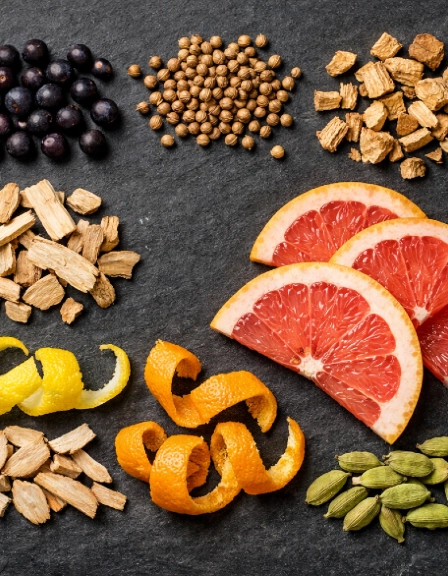
New Western dry gin is where the craft distillery movement pushed boundaries. Instead of juniper dominating, distillers highlight other botanicals. Citrus peels, exotic fruits, florals, spices. These create modern gin with expressive, non-traditional profiles.
Some New Western gins barely taste like gin at all. Juniper becomes a whisper. Lavender, cucumber, or rose takes center stage. These gins polarize people. Traditionalists call them gimmicks. Adventurous drinkers call them exciting.
The category is loose and creative, but at its best, new western dry gin doesn’t abandon juniper. It just refuses to let Juniper bully everything else into the background.
Our Hush and Whisper Gin lives here. Juniper is present and honest, but the tropical fruit notes and bright citrus aromas have equal weight. It’s a classic gin that tastes modern, or a modern gin that respects tradition. That balance is what won us Best Classic Gin at ADI.
Sloe Gin, Flavored Gins, and Barrel-Aged Gin: The Offshoots
Not all gin stays dry and clear. Some styles add sweetness, fruit, or time.
Sloe gin is made by steeping sloe berries (small, tart blackthorn berries) in gin with sugar. The result is sweet, fruity, and deep red. It’s technically a liqueur, not a proper gin, but it’s delicious in its own right.
Flavored gins include everything from raspberry to rhubarb to coffee. Compound gin falls into this category. Gin, where flavors are added after distillation rather than during it.
Barrel-aged gin rests in oak, picking up vanilla, toast, and tannin. Aging imparts additional flavors that make the spirit rounder and more complex, closer to whiskey than traditional gin.
These styles are creative and fun, but they’re offshoots. If you want to understand gin fundamentally, start with the dry styles first.
Dutch Gin (Genever): The Original
Before London Dry, before Old Tom, there was Dutch gin. Genever. It’s made from malt wine spirits (fermented grain mashed like beer, then distilled) and flavored with juniper and other botanicals. The malty flavor gives it a distinct taste closer to whiskey than modern gin.
Genever was the original medicinal liquor that evolved into the alcoholic beverage we know today. It’s less about juniper forward sharpness and more about rich, grainy depth.
If you’re a whiskey drinker curious about gin, genever is your gateway. If you’re a gin drinker curious about history, genever is where it all started.
Classic Gin Cocktails That Show the Range
These gin-based recipes work with any style, but they reveal different things depending on the gin you use.
Martini
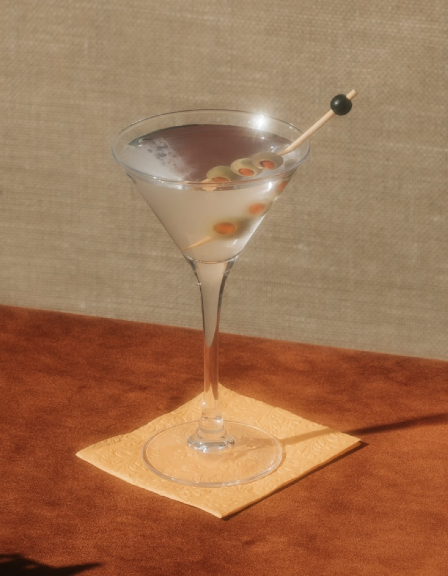
The martini is the ultimate honesty test for gin. With only vermouth for company, every botanical choice shows up clearly. Juniper, citrus, texture, and finish all stand on their own. If a gin works here, it works anywhere.
Ingredients
- 2 1/2 oz gin
- 1/2 oz dry vermouth
- Lemon twist or olives
Instructions
- Fill a mixing glass with ice
- Add gin and dry vermouth
- Stir for 20-30 seconds until well chilled
- Strain into a chilled martini glass
- Garnish with a lemon twist or olives
A martini is where gin shows its character plainly. Nothing hides.
Tom Collins
Bright, fizzy, and endlessly approachable, the Tom Collins lets gin relax a little. Citrus lifts the botanicals while soda stretches the flavors into something refreshing and easygoing. This is where softer gins really shine.
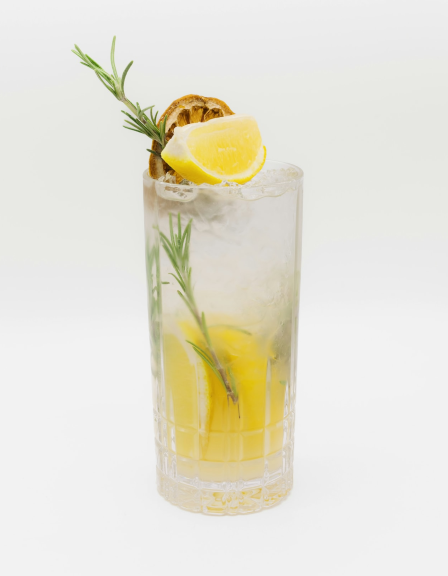
Ingredients
- 2 oz gin
- 1 oz fresh lemon juice
- 1/2 oz simple syrup
- Club soda
- Lemon wheel and cherry
Instructions
- Add gin, lemon juice, and simple syrup to a shaker with ice
- Shake for 5-7 seconds
- Strain into a tall glass filled with fresh ice
- Top with cold club soda
- Garnish with lemon wheel and cherry
Bright, refreshing, and forgiving. This is the cocktail that made Old Tom famous.
Gin Fizz
The gin fizz is all about texture. Citrus sharpens the flavor, while egg white turns the drink silky and light. It highlights how gin behaves beyond aroma, showing mouthfeel, balance, and structure in one glass.
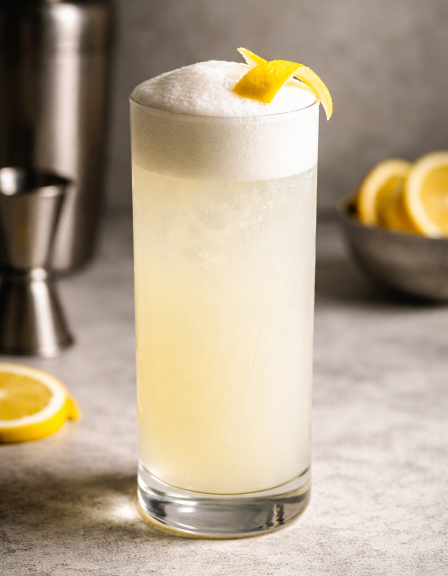
Ingredients
- 2 oz gin
- 1 oz fresh lemon juice
- 3/4 oz simple syrup
- 1 egg white
- Splash of club soda
Instructions
- Add gin, lemon juice, simple syrup, and egg white to your shaker without ice.
- Shake hard for 10-12 seconds to build foam
- Add ice and shake again until cold
- Strain into a tall glass with no ice
- Add a small splash of club soda to lift the foam
Silky, citrus-forward, and elegant. The egg white transforms texture entirely.
Negroni
Bold bitterness meets botanical backbone. A Negroni asks the gin to hold its ground against Campari and sweet vermouth without disappearing. When the gin is built well, it does not just survive here. It leads.
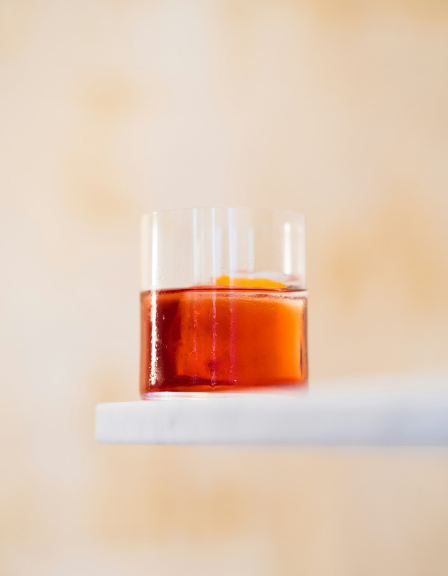
Ingredients
- 1 oz gin
- 1 oz Campari
- 1 oz sweet vermouth
- Orange peel
Instructions
- Add gin, Campari, and sweet vermouth to a mixing glass filled with ice.
- Stir for 20 seconds until cold and slightly diluted
- Strain into a rocks glass over a large ice cube
- Express an orange peel over the drink and add it as a garnish
Bold, bitter, and beautiful. The gin needs backbone to stand up to Campari.
Gin Sour
Clean, tart, and expressive, the gin sour frames botanicals in bright citrus without overwhelming them. The balance between acid, sweetness, and foam reveals how well a gin carries flavor through contrast.
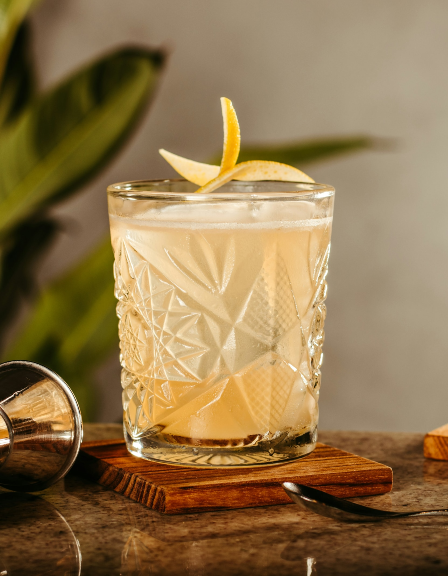
Ingredients
- 2 oz gin
- 3/4 oz fresh lemon juice
- 3/4 oz simple syrup
- 1 egg white
Instructions
- Add gin, lemon juice, simple syrup, and egg white to a shaker without ice.
- Shake to emulsify the egg white
- Add ice and shake again until cold
- Strain into a chilled coupe glass
- Garnish with thin lemon peel if desired
Clean, tart, and frothy. Let the gin’s botanicals shine through the citrus.
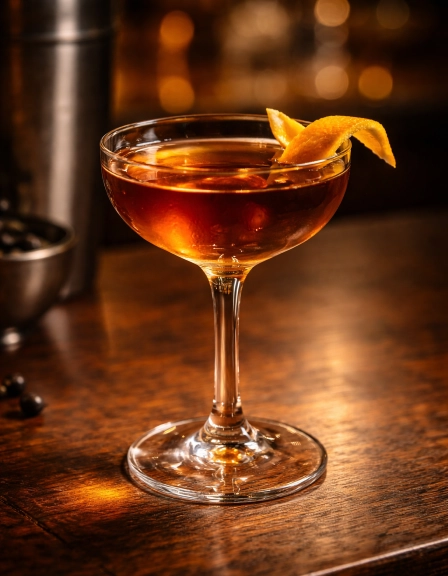
Martinez Cocktail
Rich and layered, the Martinez sits between the sweetness of Old Tom and the dryness of the martini. It brings depth and complexity forward, making it ideal for gins with warmth, spice, or subtle fruit notes.
Ingredients
- 1 1/2 oz gin
- 1 1/2 oz sweet vermouth
- 1 tsp maraschino liqueur
- 2 dashes aromatic bitters
- Orange peel
Instructions
- Add gin, sweet vermouth, maraschino, and bitters to a mixing glass with ice
- Stir until well chilled
- Strain into a chilled coupe glass
- Express an orange peel over the surface and drop it in
The ancestor of the martini. Rich, complex, and stirred.
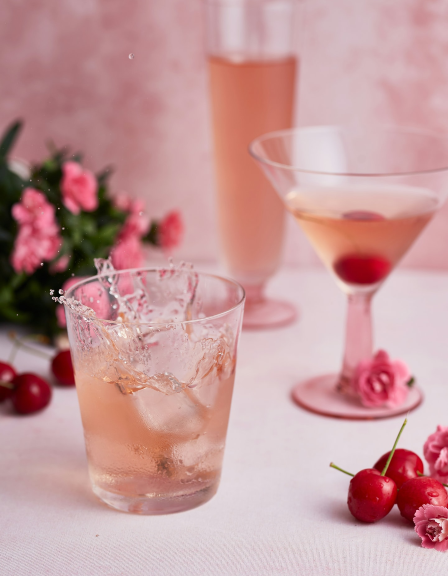
Pink Gin
Minimalist and unapologetic, Pink Gin is about purity and intensity. Bitters add spice and depth, but the gin stays front and center. This cocktail shows how a well-built gin can be powerful without being harsh.
Ingredients
- 2 oz gin
- 4-5 dashes Angostura bitters
Instructions
- Add bitters to a chilled rocks glass or old-fashioned glass
- Pour gin over the bitters
- Swirl gently to mix
- Serve neat or with one large ice cube
Simple, strong, and surprisingly smooth. Originally a naval tradition.
How to Choose the Right Gin
If you want crisp structure and intense citrus notes, look for a London Dry-style or classic gin.
If you want softness and roundness, try Old Tom or gins with prominent fruit.
If you want earthy depth, explore Plymouth or herbaceous styles.
If you want bold intensity, reach for navy strength or juniper forward expressions.
If you want creativity and surprise, dive into New Western dry gin and the craft distillery movement.
If you want one bottle that works across all these moments, that’s what we built. Grain-to-glass. Award-winning. Balanced enough for a martini, expressive enough for a negroni, and interesting enough to sip neat.
The Perfect Gin Is the One You Keep Reaching For
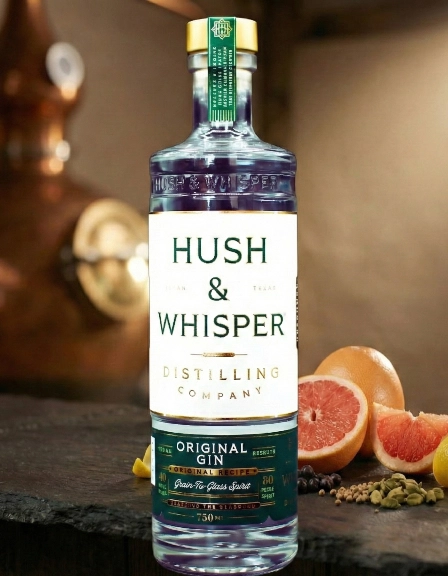
Gin has come a long way from its origins as a medicinal liquor in Europe. Today, distillers explore regional botanicals, production methods, and flavor philosophies that push the category in different directions. British gin houses still honor structure and restraint. American craft distilleries continue to test the edges. Both approaches matter.
Rules or trends do not define the right gin. It is the one that fits your drinking style. The one that holds its shape in a martini, stands firm in a negroni, and still feels worth sipping slowly with nothing more than ice and time.
At Hush and Whisper, we work in that space between tradition and instinct. Juniper is present and honest. Citrus and fruit bring softness without sugar. The finish stays with you. It is built to be versatile without losing its voice.
In the Quiet Between Sips
Gin is not a single flavor or a fixed idea. It is a conversation between botanicals, process, and restraint.
The best way to understand it is to spend time with it. Taste across styles. Return to the classics. Pay attention to how texture, aroma, and balance change from glass to glass.
And if you want to see how those choices come together in one place, you are always welcome to visit us in Bryan. No rush. No script. Just good gin, made with intention. Contact us to get your hands on a bottle of our award-winning gin!
Gold Medal, San Francisco World Spirits Competition 2025
Gold Medal and Best Classic Gin, American Distilling Institute 2025